Finding Presence, Meaning, and Connection During the Holiday Season

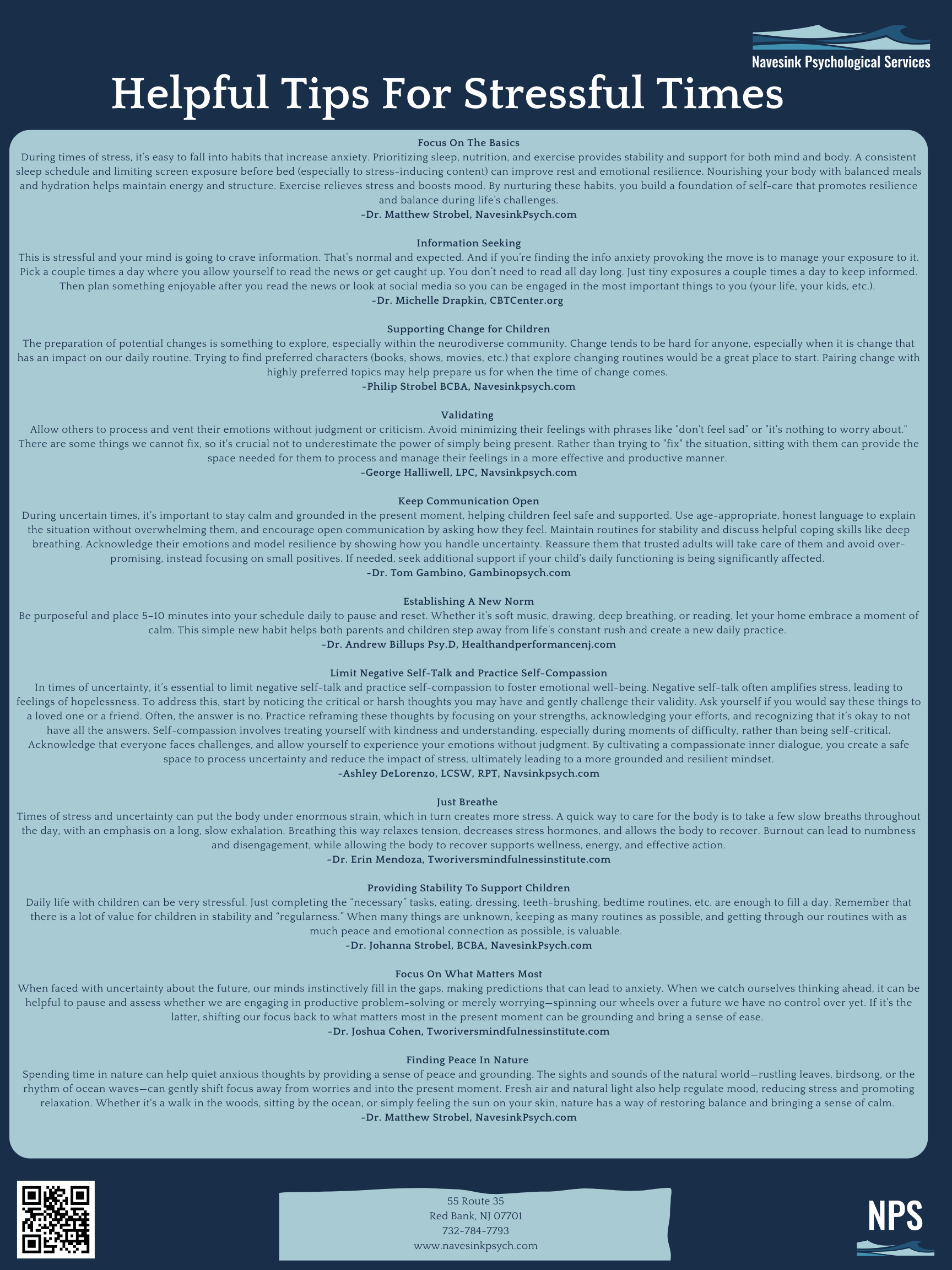
As the year comes to a close, we would like to wish you a happy and healthy holiday season. This time of year often invites reflection on the meaningful moments of the past year and on the hopes and intentions we carry forward into 2026.

For many, the holidays are full and fast-paced. While we cannot always control the demands placed on us, we can choose how we relate to them. Even brief moments of intentional presence can help anchor us during busy or emotionally charged times. Presence does not require silence or stillness; it can be found in ordinary moments such as preparing a warm cup of cocoa, watching snow fall, wrapping gifts, or even during a routine task such as washing your hands. Gently noticing what you can see, feel, or hear in these moments allows you to step out of “autopilot” and reconnect with the here and now.

The holidays can also bring automatic thoughts and expectations about how we should feel, what the season should look like, or how others should behave. When these expectations go unexamined, they can contribute to stress, disappointment, or guilt. Taking time to notice these thoughts, and asking whether they are helpful or accurate, can create space for more balanced and compassionate perspectives. This is also a great opportunity to step away from social media where the shoulds can be strengthened as we view everyone’s ideal pictures and memories, which is far from the reality we all live.
We also recognize that the holidays can be especially difficult for those who have experienced loss, loneliness, or significant change over the past year. If joy feels hard to access, you are not doing anything wrong. Making room for difficult emotions, rather than pushing them away, can be an important part of healing. At the same time we can utilize the power of connection and small, values-based actions. Reaching out to a trusted friend, family member, or support person can be a meaningful step toward connection, even if it feels challenging at first.

As you move toward the new year, we invite you to reflect on what truly matters to you and to consider small, intentional choices that align with those values. Growth does not require perfection, only willingness and compassion toward yourself!

Here’s to a reflective, connected, and meaningful holiday season, and to a supportive and intentional 2026.

-The NPS Team

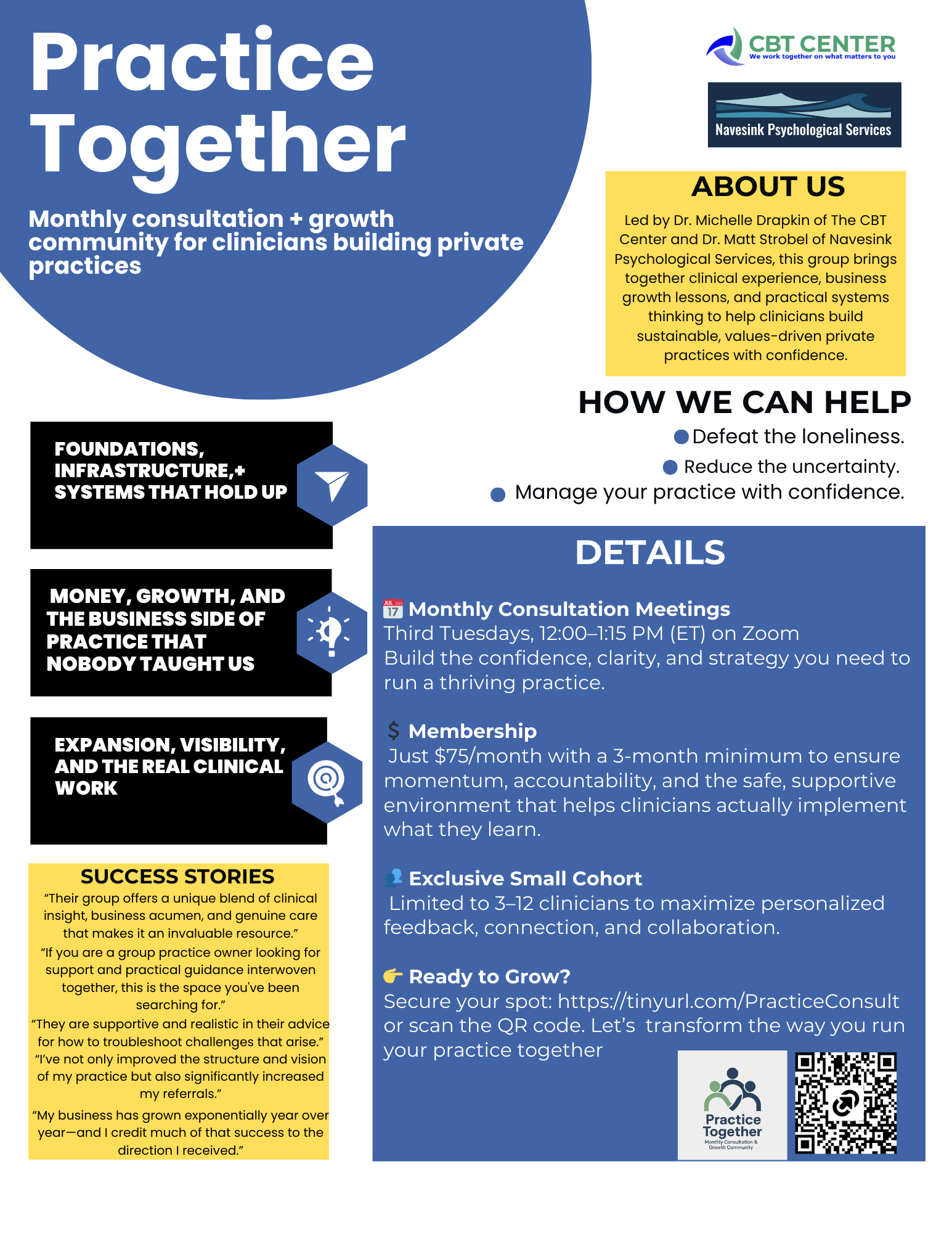
Consultation for Clinicians Building Private Practices

Dr. Drapkin and I are launching Practice Together, a monthly consultation group for clinicians building private practices.

We’ve both been in the trenches of practice ownership, learned a lot the hard way, and wanted to create a space to share what we’ve learned with others doing this work.

Small group. 75 minutes. Virtual. Thoughtful, practical, and supportive.

Details here: https://tinyurl.com/PracticeConsult

The Missing Link in Autism Support? Outpatient Care That Connects All Settings

At a recent conference focused on advancing care for individuals with autism through scientific research, Thomas Frazier II, Ph.D., a respected researcher and current Chairman of the Board of Directors at Autism Speaks, responded to a participant’s question about how to justify needed outpatient services for children who also attend school full-time. This concern is familiar to many of the families we serve at Navesink Psychological Services, who are often juggling full-time schooling alongside essential therapeutic supports.

Dr. Frazier emphasized that outpatient services remain crucial for children, as they frequently target skills and areas of functioning that fall outside the scope of school-based supports. For example, children may require community-based interventions to help them successfully participate in extracurricular activities, or families may encounter behavioral challenges at home that school providers cannot directly address.

In his response, Dr. Frazier expressed hope for more integrated, coordinated, and collaborative models of care, with outpatient providers taking the lead in supporting children across environments, including sharing information back into school settings. His comments immediately resonated with the model of care used at NPS, in which we aim not only to deliver effective interventions to families, but also to connect these interventions to the broader contexts in which children live and learn. Providers who do this work effectively need both a solid understanding of school systems and strong consultation skills. While only one small part of this workshop, it was encouraging to hear our model of practice at NPS, highlighted in a positive way!

-Dr. Johanna Strobel, BCBA

Pediatrician vs. Psychologist for an ADHD Evaluation: Which Is Best for Your Child?

When families begin exploring whether their child may have ADHD, one of the first questions that comes up is who should do the evaluation. Two common options are a pediatrician or a psychologist, and while both can diagnose ADHD, the type of evaluation and the level of detail you receive can be very different. Understanding the strengths and limitations of each can help you choose the right fit for your family.

When a Pediatrician May Be the Right Choice

For many families, the pediatrician is the first stop and sometimes that’s all that’s needed.

Pros of a Pediatrician Evaluation

✔ Quick and accessible
Pediatricians can usually provide an ADHD evaluation within a short timeframe. If you need documentation quickly, for school, accommodations, or medication management, this can be very helpful.

✔ Familiar with your child
Most pediatricians know their patients well and already have a long-term medical history, which can support their clinical decision-making.

✔ Adequate for straightforward ADHD cases
When the primary goal is simply to confirm ADHD and begin medication, pediatricians often use brief rating scales completed by parents (and sometimes teachers), along with a brief interview and in-office observation.

Cons of a Pediatrician Evaluation

✘ Typically brief and limited in scope
Pediatricians usually do not conduct comprehensive assessments. Their evaluations often rely on checklists rather than deeper testing.

✘ May miss learning or emotional comorbidities
ADHD commonly occurs alongside anxiety, learning differences, or executive functioning challenges. These are difficult to identify without a more detailed psychological evaluation.

✘ Treatment support outside of medication may be limited
While pediatricians are essential for medication management, they often cannot provide detailed recommendations for behavioral, academic, or therapeutic interventions.

When a Psychologist Is the Better Choice

If you want a deeper understanding of your child, not just a yes/no diagnosis, a psychologist can provide a far more comprehensive evaluation.

Pros of a Psychological Evaluation

✔ Thorough and comprehensive
Psychologists use multiple data sources: clinical interviews, rating scales, standardized tests, direct observation, and cognitive or academic assessments. This leads to a fuller picture of your child’s profile.

✔ Identifies comorbidities
Psychologists can assess for anxiety, depression, autism, learning disorders, executive functioning issues, and more. This matters because the majority of children with ADHD have at least one additional challenge that affects treatment.

✔ Personalized treatment recommendations
You don’t just walk away with a diagnosis; you get a roadmap. Psychologists provide individualized strategies for home and school, behavioral recommendations, and guidance for therapy, accommodations, and skill-building.

✔ Ongoing support beyond medication
Families often find that psychologists provide an additional layer of support for understanding behaviors, advocating at school, and navigating long-term needs.

Cons of a Psychological Evaluation

✘ Takes longer
Comprehensive testing can take several hours, and reports may take time to complete.

✘ Higher upfront cost
Psychological evaluations tend to be more expensive, though the depth of information can offer substantial long-term value.

✘ Availability may be limited
It can take time to find a psychologist with openings who specializes in ADHD and child assessment.

Which Should You Choose?

A pediatrician may be sufficient if:

  • You need quick documentation of ADHD

  • The case seems straightforward

  • Your primary goal is to access for medication

A psychologist is the better choice if:

  • You want a deep understanding of your child’s strengths and challenges

  • You suspect learning issues or other emotional/behavioral concerns

  • You want detailed, individualized treatment and school recommendations

  • You want support beyond medication management

Bottom Line

Both pediatricians and psychologists play important roles in supporting children with ADHD. The right choice depends on what you’re hoping to learn, the complexity of your child’s needs, and how comprehensive you want the evaluation to be.

If your goal is simply to document ADHD quickly, a pediatrician can usually meet that need. But if you want a full picture of your child’s functioning, learning style, and any co-occurring conditions, along with a tailored plan for moving forward, a psychologist is typically the best option.

“What’s the best planner for a student with ADHD?”

Unfortunately, there isn’t a single right answer. The truth is, the best planner is the one your student will actually use, and one that fits within the systems they already rely on. A beautifully designed planner doesn’t do much good if it sits unopened at the bottom of a backpack!

Start with the Ecosystem

Before buying anything new, look at what the college or school already has in place. Many universities now use online learning management systems (like Canvas or Blackboard) that include calendars, task lists, and notification features. Building out from those existing tools, rather than trying to create a completely separate system, helps reduce friction and increases the odds that your student will stick with it.

Structure Over Stationery

Even more important than the planner itself is the structure and routine around how it’s used. For example:

  • Set a weekly planning time: Every Sunday night, review upcoming assignments, exams, and commitments, and map out the week ahead.

  • Create a start-of-semester ritual: When new classes begin, add all major due dates and exam days into the planner or app.

  • Check in regularly: Early on, it can help to have frequent check-ins — either with a parent, coach, or counselor — to make sure systems are working. Over time, these can fade as the student gains independence and confidence.

Without these habits, even the most perfect planner won’t make much difference.

Don’t Forget Campus Resources

If your student doesn’t already have academic supports in place, reach out to the disability services office (sometimes called accessibility services or student support services). They can offer accommodations, coaching, and tools that make organization and time management more manageable.

Bottom Line

The best planner for an ADHD student isn’t a product; it’s a process.  Find something that integrates with their existing tools, build consistent routines, and reinforce those habits until they stick. That’s where real progress happens.

Navigating IEPs, 504s, and Other Supports: What You Need to Know!

Navigating IEPs, 504s, and Other School Supports: Free Workshop

📅 Tuesday, October 7, 2025
⏰ 6:30 – 8:30 PM
📍Beacon United Methodist Church: 96 3rd Ave, Atlantic Highlands, NJ 07716
💲 Cost: Free
🌟REGISTER NOW🌟

✨ Learn. Advocate. Connect.
Families of children with special needs often feel confused and unsupported when navigating school systems. This workshop will give you the tools to understand your child’s rights and advocate effectively.

📘 Topics Covered
Understanding 504 Plans & IEPs
Evaluations & eligibility criteria
Parent rights in special education
Practical advocacy strategies

💬 Additional Future Opportunities
🔹 Individual Consultations
30-minute, one-on-one sessions with psychologists, BCBAs, or special educators
Review evaluations, IEPs, 504 plans, or other documents
Receive customized, actionable guidance

🔹 Peer Networking
Connect with caregivers facing similar challenges
Build support before and after sessions

🎤 Presenter
Dr. Matthew Strobel, Licensed Psychologist & Advocate
With over 10 years of experience in schools and private practice, Dr. Strobel helps families bridge the gap between school-based services and community supports.

✅ FREE Community Event – All are welcome!
📩 Space is limited. Register early to reserve your spot! In person and virtual

🤝 Partnership Acknowledgment
This workshop is presented as a partnership between Navesink Psychological Services and Friends Grow Friends Foundation, as part of the Center for Youth Social Emotional Wellness Summit Grant in collaboration with Rutgers University.

Registration: https://docs.google.com/forms/d/e/1FAIpQLScCDzxA5eNHrY3t4ArjOloOldZfNlfRw-pOci7yNzwnEsNbAQ/viewform

School Year Start Up Tip

The start of the school year often brings mixed emotions of excitement and anxiety. One way to think about this comes from Florence Williams: “Anxiety is just excitement without breath.”

Take a few minutes to take a breath while supply shopping, figuring out schedules, and checking in with friends about what classes they are in. Doing so can result in more excitement and less anxiety as we transition into the school year.