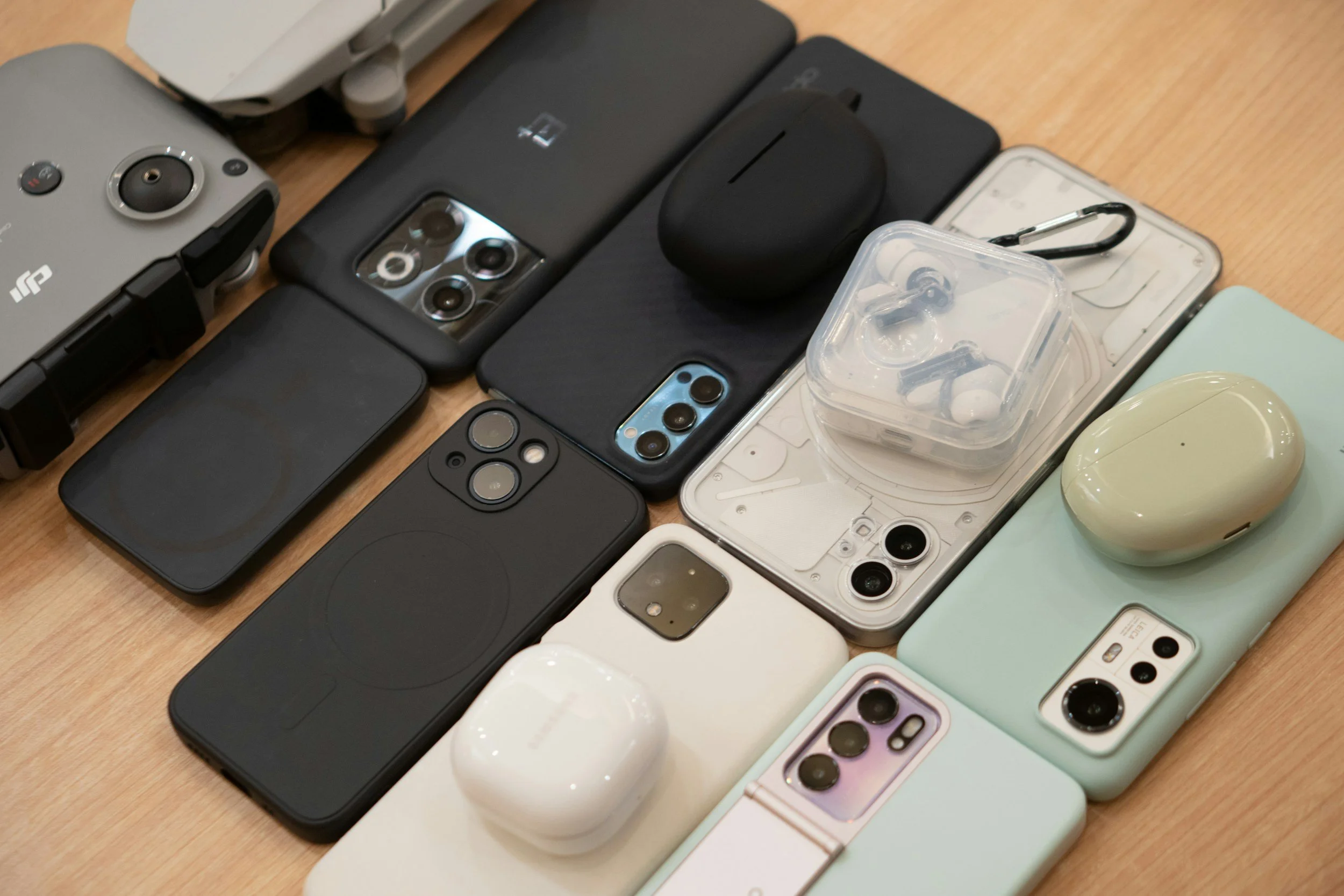
What a New York Times article taught me about my generation's relationship to phones, and each other.
Right outside my house, there is a bus stop for the local elementary and middle school. It's the same one I used to wait at. But it doesn't have the same feel I remember. Instead of excited chatter with parents or the other kids waiting, it seems that eyes are glued on phones, kids and parents alike. When I first noticed this, I really channeled my inner Boomer and thought "those damn phones" and "kids these days." But then I realized, I do the exact same thing. Whenever I am waiting for a bus at my university I'm usually scrolling on my phone and avoiding interacting with anyone else. I'm barely a decade removed from those kids at the bus stop, and yet I'm acting the same way.
I'm not writing because I think phones are evil (I don't, and admittedly I use mine constantly) but because I think my generation absorbed a new way of being together (and not being together) without ever really actively deciding to. I'm close enough to my own adolescence to remember what that substitution felt like from the inside, and at the same time far enough out now to watch it start even earlier for the kids coming up behind me. At 21 and turning 22 this year, I am the oldest of my generation in my family. I received my first phone when entering middle school and did not access social media until later. Now, I watch elementary-aged cousins navigating iPads, smartphones, AI, and social media driven by algorithmic feeds before they even reach their pre-teen years.
This blog aims to honestly analyze the pros and cons of children and adolescents having phones and social media. Technology is here to stay. The real question is: how do we utilize these devices as tools rather than psychological crutches?
The studies
The New York Times piece highlights two primary economic and sociological papers exploring the correlation between phones and birthrates.
The working theory is that smartphones gave people a low-effort substitute for the in-person interactions that used to lead (eventually) toward relationships and kids, like:
- Scrolling instead of meeting up
- Texting instead of dating
A phone is a remarkably good way to feel like you're connecting with someone while doing very little of the actual social risk-taking and intimacy-building that real connection requires.
Why this matters for teens
The demographic data shows that this effect is concentrated among teenagers and young adults. This timeline lines up with patterns documented in other public health trends like:
- Decreasing rates of youth sexual activity
- Exponentially rising rates of adolescent anxiety and depression
- Elevated metrics of self-reported isolation
When I think back to my own early teenage years and recall the slow replacement of hanging out with messaging about hanging out, those national numbers stop being abstract pretty fast.
The major takeaway here is that phones seem to be quietly substituting for a category of in-person social risk and intimacy-building that adolescence used to be largely organized around. Perhaps the more concerning thing though is that we don't yet know what's filling that gap, or whether anything is at all.
To play devil's advocate
Not everyone is convinced this is as clean as the headline suggests. Other economists who study fertility point out that birth rates have been declining since long before the iPhone (and Steve Jobs) was even in existence. Demographics are influenced by a number of factors:
- Evolving cultural milestones and delayed family planning
- Expanded access to reproductive healthcare and contraception
- Compounding financial, housing, and economic pressures on young adults
I think both things are true at once. The long decline is real and has many causes, and something about the device in nearly every person's pocket seems to be adding its own distinct pressure on top of that.
Navigating the path forward
Truthfully, I have mixed feelings about the article and its implications. Are phones impacting the way we interact with each other? Yes, absolutely. But should we be sounding the alarm on phones because they are causing low birth rates? I'm not so sure.
Ultimately, assigning the blame entirely to the hardware misses the broader societal context. I would argue that phones are the vehicle that we are using to cope and run away from other issues. Furthermore, we cannot ignore the profound impact of the COVID-19 pandemic on social development. Kids and adolescents missed out on critical time to learn and practice interpersonal skills in a natural environment. I was a freshman in high school when the pandemic started and my sister was in seventh grade. I've seen the ramifications of this in my own peers and younger.
Despite the common stereotype that Gen Z is content with digital isolation, there is an immense, active desire within my generation to meet organically and interact in real life. My friends are fascinated by the concept of "third spaces": accessible, physical community gathering spots outside of home (the first space) and work or school (the second space).
Frequently asked questions
If you're navigating questions about technology, connection, or adolescent development in your own family, our team at Navesink Psychological Services is here to help.
Get in touch