Parenting
Teen Safety
Adolescent Development
What parents need to know, and how to say it.
MS
Matthew Strobel, Psy.D.
Licensed Psychologist · Navesink Psychological Services
navesinkpsych.com ↗
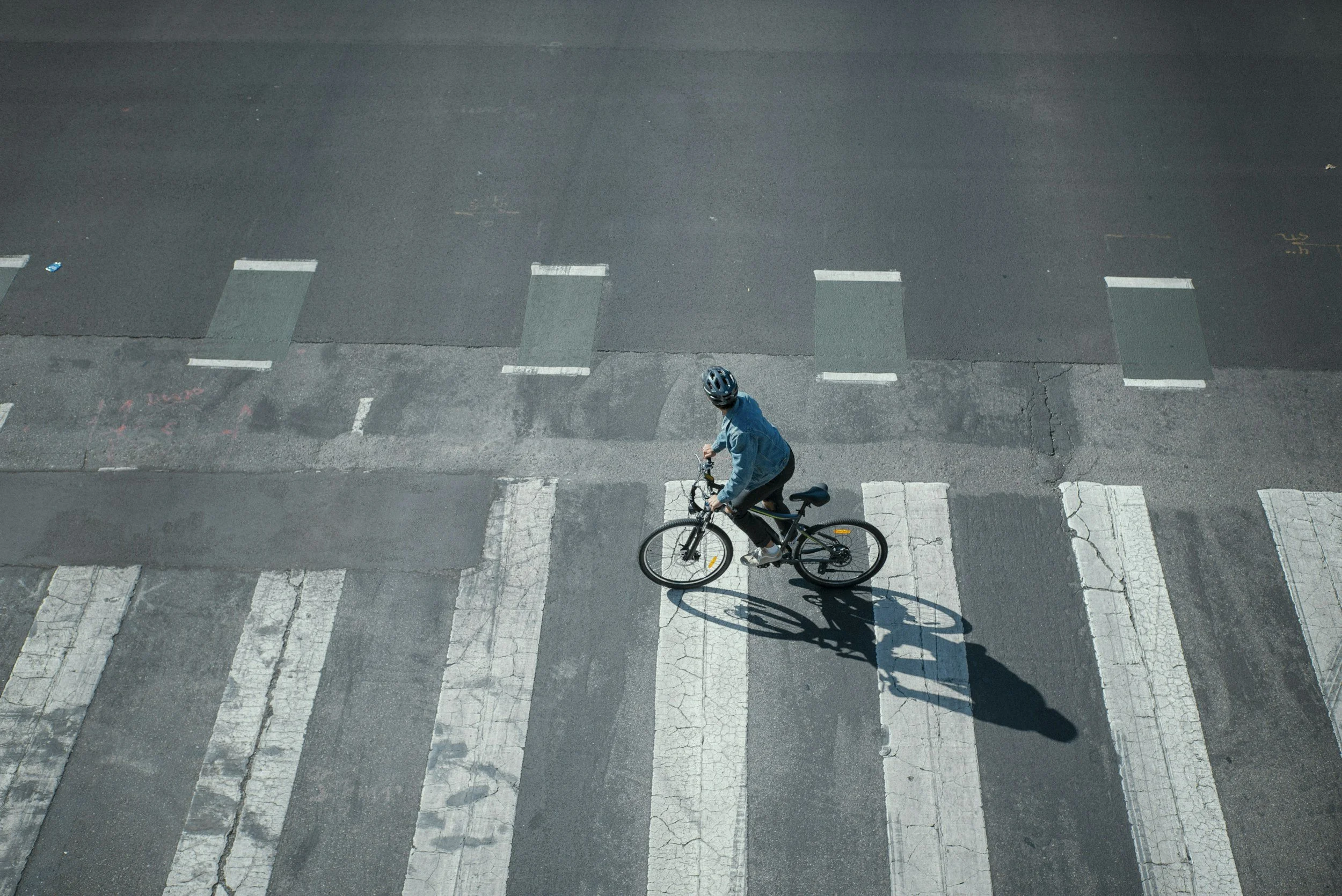
Our community has experienced real tragedy recently involving e-bikes. If you have a kid asking for an e-bike or permission to ride a friend's, this post is for you. Our goal is to equip parents with the knowledge and skills they need to feel ready to effectively talk to their teen and keep them safe.
This post comes from a place of deep personal experience. I was hit by a car while riding a regular bicycle as a young adult. I was lucky. The outcome could have been very different. And I was a college-aged adult with a developed brain and years of experience navigating the world and driving. I still ended up in the wrong place at the wrong time. That is the nature of road accidents. They can happen to anyone. But they are significantly more likely to happen to people who feel invincible and whose brains are not yet wired for the kind of situational awareness that sharing a road with cars requires.
That is not a criticism of teenagers. It is neuroscience.
The teen brain is not built for this
The prefrontal cortex, the part of the brain responsible for impulse control, risk assessment, and decision-making, does not fully develop until the mid-twenties, and develops later in males. Teenagers are not making bad decisions because they are bad kids. They are making bad decisions because the part of the brain that pumps the brakes on bad decisions is still under construction.
But it is not just the prefrontal cortex. Three interconnected areas of the brain all play a role in the kind of situational awareness that riding an e-bike on a road with cars actually requires.
Prefrontal Cortex
Handles impulse control, risk assessment, and decision-making. Still developing until the mid-twenties. This is the brake pedal, and in teenagers it is not fully installed.
Limbic System
Processes excitement and reward. In teenagers, this system is hyperactive and underconnected to the prefrontal cortex. The thrill of speed registers loudly. The rational warning signal stays quiet.
Anterior Cingulate Cortex
Responsible for real-time error detection and course correction. Underdeveloped in teens, meaning they are neurologically slower to recognize when a situation is going wrong and react in time.
E-bikes add a layer of danger that regular bicycles simply do not have. They are faster, heavier, and capable of reaching speeds that require real road experience to navigate safely. Most teenagers have never driven a car, and if they have it has not been for long. They have no frame of reference for how vehicles behave, how intersections work, or how fast things can go wrong. Throwing them onto a machine that can hit 28 miles per hour or more on a road with cars is not the same as letting them ride a bike around the neighborhood.
And then there are the modified bikes. Many of the e-bikes being sold and traded among teenagers have been altered to go significantly faster than their original design. Parents often do not know this is happening. The bike looks the same. It is not. Finding a reputable bike shop that can show you the differences and help your teen pick a bike that is the right fit is a great way to find a middle ground for teens who want an e-bike and parents who want to keep them safe. It also follows the harm reduction approach we will talk about next.
The thrill of speed is neurologically louder in the teenage brain than the warning signal that says slow down. That is not a character flaw. It is biology. And it is why the conversation has to start with parents, before the moment of decision arrives.
Abstinence does not work
I want to be honest with parents here, because I think the instinct to say "absolutely not, end of conversation" is understandable but not always effective. We know from research on teen substance use, sexual behavior, and risk-taking that a pure abstinence approach tends to fail. Teens find ways around it. The goal is not to pretend the risk does not exist. The goal is harm reduction.
That means: if your teenager is going to be around e-bikes, which they will be because their friends have them, the conversation cannot end at no. It has to include what to do when a friend offers them a ride, what to do if they feel pressured, and what safety looks like if they are ever on one.
How to talk to your teen about peer pressure around e-bikes
This is where the clinical piece comes in. We see this pattern constantly with alcohol, nicotine, and substance use. The same dynamics apply here.
Teenagers are not usually pressured by strangers. They are pressured by friends they like and want to stay connected to. Saying no in that moment feels like saying no to the friendship, which is why a flat refusal rarely works without a way out.
Give your teenager an exit. Something they can say that does not make them the problem.
"My parents track my location and they will see the speed."
"My parents will literally take my phone if I get on that."
Let the parent be the villain. That is fine. We can take it.
Let's not be naive: teens are much more tech savvy than parents and will always find a way to work around a system. Tracking is just one tool in the toolbox, but just like sometimes you need a hammer and sometimes you need a wrench, we always want to stock the toolbox with the right tools for the job. Besides tracking, regular conversations about the dangers of riding too fast can go a long way. Try not to preach. Instead, take an approach where you ask more questions than you provide facts. Keep the conversation open and ongoing. How to Talk So Teens Will Listen and Listen So Teens Will Talk is a timeless classic with practical advice for parents about how to have your voice actually heard.
The goal is to give your teenager a script that preserves the friendship and gets them off the bike.
When they say you're being overprotective
They will say it. Here is how I respond, and you are welcome to use it:
"When you were a baby, you did not want to get in your car seat either. You screamed about it. I strapped you in anyway because my job is to keep you safe, not to be your friend in every moment. That does not stop being true because you are older. It just looks different."
Overprotective is what teenagers call it when a parent does their job and the teenager does not like the outcome. That is okay. They do not have to like it. It is your job to keep them safe.
A note on New Jersey law
As of July 19, 2026, New Jersey has some of the strictest e-bike laws in the country. This is worth knowing not just for safety reasons but because it gives you a concrete, factual basis for the conversation with your teen that is harder to push back on than "I just think it's dangerous."
NJ E-Bike Law: effective July 19, 2026
Riders under 15 are banned from operating any e-bike on public roads
Riders 15 and 16 need a specialized motorized bicycle license from the NJ MVC, including a knowledge test, vision test, road test, and 45-day permit period
Riders 17 and older need a standard NJ driver's license
All e-bikes must be registered with the MVC and carry liability insurance
Helmets are mandatory for all riders at all ages
If your teenager is riding without a license, registration, and insurance, they are breaking the law. If something happens, your family may have no coverage. At best, something could happen to your child. At worst, others could be seriously hurt too.
Frequently asked questions
My teen says all their friends have e-bikes. How do I hold the line?
⌄
This is one of the most common pressure points parents face. The answer is not to dismiss the social reality but to acknowledge it while holding firm on the safety concern. "I know it feels like everyone has one. My job is not to be like everyone's parents. My job is to keep you safe." If you are open to allowing an e-bike under the right conditions, make that clear and work toward it together rather than making it a complete standoff.
How do I know if an e-bike has been modified?
⌄
This is genuinely hard to detect without expertise, which is exactly why we recommend involving a reputable bike shop. A knowledgeable shop can inspect a bike and identify whether it has been altered. If your teen is riding a bike that came from another teen, a private sale, or an online marketplace, it is worth having it looked at. Do not assume it is what it appears to be.
What if my teen rides an e-bike at a friend's house without my knowledge?
⌄
This is where the pre-conversation matters most. If your teen already has a script, an exit line they can use with friends, they are far more likely to use it in the moment. It is also worth having an honest conversation with other parents in your circle. You may find more shared concern than you expect, and a collective approach carries more weight with teenagers than one family going it alone.
When should we consider professional support around these conversations?
⌄
If conversations about safety consistently escalate into significant conflict, if your teen is engaging in risk-taking behavior across multiple areas, or if your family is processing fear or grief connected to local tragedies, speaking with a
therapist who works with adolescents and families can help. Sometimes a neutral third party can open conversations that feel impossible at home.
Saying no to your teenager is one of the hardest parts of parenting. It does not feel good. It creates conflict. They will be angry. And it is still the right call. You are not their peer. You are their parent. Those are different jobs, and the second one matters more.
If you want support navigating these conversations with your teen, or if your family is processing fear or grief connected to what has been happening in our community, our team is here.
Reach out for a free consultation