Performance Psychology

Working Hard When No One’s Watching: Lessons Learned From The New York Knicks

What Jalen Brunson's championship mindset can teach students, parents, and anyone building something worth being proud of.


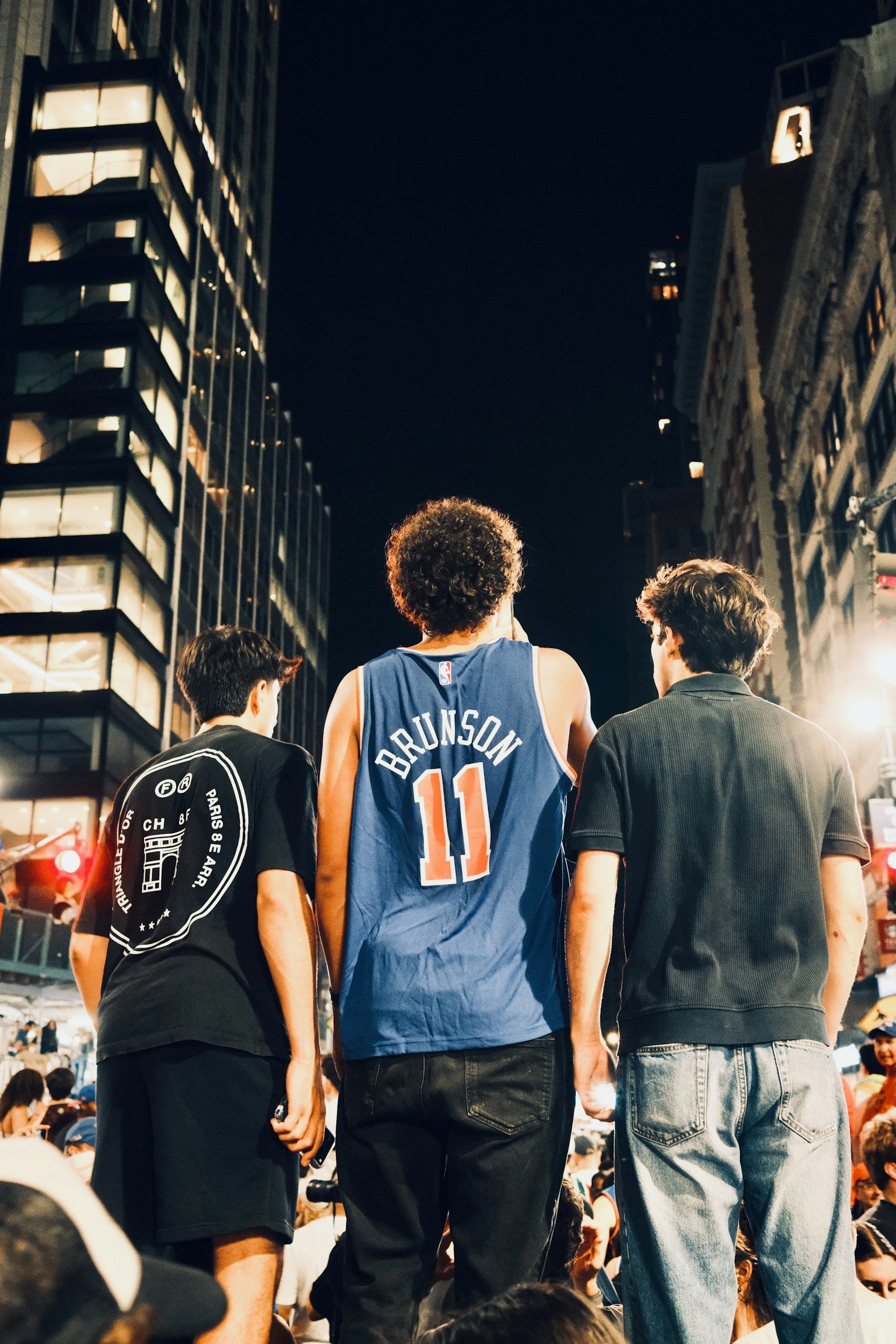
The New York Knicks just won the 2026 NBA Championship, and if you have been following this team at all, you know that Jalen Brunson has been the heartbeat of this entire run. But what struck me most in the aftermath was not a highlight reel moment. It was what Brunson said about where his confidence actually comes from.

"My confidence comes from my work ethic. You put the confidence in everything you do when the lights are on because of everything you've done when no one's watching."
Jalen Brunson, after winning the 2026 NBA Championship (The Growth Equation)

That is not just a great sports quote. It is a framework for how any of us, students especially, can approach performance, preparation, and the pressure that comes with being asked to deliver in front of others.

Working hard when no one is watching is not just a mindset. It is the foundation that makes performing in public feel like the natural next step rather than a leap into the unknown.

The psychology behind working when no one is watching

There is a well-established phenomenon in psychology called social facilitation and social inhibition. Here is the basic idea: when we are watched by others, we tend to perform well-practiced, mastered tasks even better. The presence of an audience elevates arousal, and for things we know deeply, that arousal helps. But for tasks we have not yet mastered, that same arousal makes performance worse.

Think about what that means for students. A student who has genuinely studied and worked through the material before a quiz or exam is not just better prepared on the content: they are also more likely to perform even better under the social pressure of a classroom full of peers. The crowd becomes an advantage, not a threat.

The reverse is equally true. A student who has not put in adequate preparation does not just show up underprepared: the social pressure of the testing environment can actually push their performance further down. The same audience that lifts the prepared student can work against the unprepared one.

When the lights were brightest, Jalen was able to shine because he had already mastered his craft in the quiet moments. The crowd at Madison Square Garden did not create his confidence. It just gave it somewhere to go.

Every child needs a champion

Brunson is the first to point to his father, Rick, as a foundational reason for who he became. Rick Brunson played in the NBA for nine seasons, including a stint with the Knicks in 1999, the last time the team reached the Finals before this year. But what Jalen has talked about repeatedly is not the games or the highlights. It is the hours.

"There'd be days in high school where I thought I played well, my team got the win, and I'd go to the gym still in my uniform, and my dad would say, 'C'mon, let's go. We have more work to do.'"
Jalen Brunson (BrainyQuote)
"I think watching my dad growing up and seeing how hard he worked to be in the position he was, it only pushed me to work harder once I got the opportunity."
Jalen Brunson, Men's Journal, June 14, 2026

Rick was Jalen's champion. Not just a cheerleader, but someone who held him accountable, pushed him when he wanted to stop, and modeled the exact work ethic he was asking his son to build. Every child needs that person. Someone who encourages them when they feel defeated, picks them up when they fall down physically or emotionally, and walks alongside them through the ups and the downs without looking away.

That role does not require athletic expertise or professional credentials. It requires presence, consistency, and the willingness to keep showing up even when your child pushes back. For many kids, that champion is a parent. For others, it might be a coach, a teacher, a therapist, or a mentor. What matters is that the child has someone who genuinely believes in their capacity to grow and is willing to stay in it with them.

The team you build around yourself matters

Brunson has been equally clear about his teammates. The Knicks were given a 31% chance of winning the championship heading into the Finals. They were doubted throughout the postseason. But from inside that locker room, the only opinions that mattered were their own.

"I want to do it with a group of guys you go to the gym with every day, the days you don't want to go to practice, the days you're tired, beat down, but you have your teammates to lift you up."
Jalen Brunson (Sports Illustrated)

For children, the peer group works the same way. Who your child spends time with shapes how they see themselves, what they believe is possible, and whether they are lifted up or pulled down in moments of doubt. As parents and caregivers, one of the most meaningful things we can do is help our children pay attention to how the people around them make them feel: not the social status of those friendships, not the popularity implications, but whether those relationships bring out the best in them.

Help your child ask: does this person encourage me? Do I feel better or worse about myself after spending time with them? Do they push me in a good direction or pull me away from my goals? Those questions matter more than any other metric of a friendship's value.

Three lessons worth taking from the Knicks' championship run

  • 1
    Prepare in private so you can perform in public
    The confidence Brunson showed in the Finals was built in gyms with no audience, in summers with no cameras. For students, consistent study and practice before assessments does not just improve scores: it changes how the pressure of performing in front of others actually feels.
  • 2
    Find your champion and be one for someone else
    Rick Brunson showed up with accountability and belief in equal measure. Every child deserves that presence. If you are a parent, caregiver, or educator, that role may already be yours. Step into it intentionally.
  • 3
    Build your team with intention
    The right people make hard work more sustainable and self-belief more durable. Help the children in your life evaluate their friendships not by social currency but by how those relationships make them feel about themselves and their potential.

Frequently asked questions

What is social facilitation and how does it apply to students?
Social facilitation is the tendency to perform mastered tasks better in the presence of others. For students, this means that thorough preparation before an exam does not just help with content recall: it can actually improve performance under the social pressure of a classroom setting. The reverse, social inhibition, describes how underprepared students may perform even worse in the same environment.
How do I help my child build a stronger work ethic?
The most powerful thing a parent can do is model the behavior they want to see. Children learn work ethic by watching the adults around them. Beyond modeling, consistent encouragement paired with accountability, showing up when things are hard and holding the standard without shaming, builds the internal motivation that eventually drives a child to work hard even when no one is watching.
How do I talk to my child about their friend group without creating conflict?
Focus on feelings rather than judgments. Instead of telling your child a friend is a bad influence, ask how they feel after spending time with that person. Do they feel energized or drained? Confident or insecure? Encouraging that kind of self-reflection builds emotional intelligence and gives your child a framework for evaluating relationships on their own terms rather than reacting to parental criticism.
When should a family consider working with a psychologist around these issues?
If your child is struggling with motivation, academic performance, self-esteem, or peer relationships in ways that are affecting their daily life or causing significant distress, speaking with a licensed psychologist can be a helpful next step. These are not signs of failure: they are signs that your child may benefit from additional support building the skills that underlie long-term success.

The Knicks were given a 31% chance. They did not let anyone else's math define what was possible. That kind of belief does not arrive on its own: it is built, quietly and consistently, in the work that happens when no one is watching.

If you are looking to support your child's motivation, self-belief, or academic performance, our team at Navesink Psychological Services is here to help.

Reach out for a free consultation

Found this helpful?

Share it with someone who might benefit, or explore more resources from the Navesink Psychology team.

More articles Get in touch

Let's Go Knicks! What We Can Learn From Their Historic Run

What the Knicks' historic playoff run can teach athletes, performers, and anyone facing long odds.


As a sport psychologist, it is hard not to root for the Knicks right now. They are the most local team to our practice here in Red Bank (RIP NJ Nets), and what they are doing in this playoff run is genuinely remarkable. They are showing tremendous grit and resilience, never giving up when the odds are stacked against them: down 20 against Boston, down 29 against San Antonio in Game 4 last night, and still finding a way.

Let's break down some of the quotes from this postseason, especially from last night's incredible comeback win over the Spurs, and explore what they can teach you as an athlete, a performer, or anyone who competes under pressure. This applies directly to athletes, but also to actors, dancers, musicians, and performers of all kinds who face high-stakes moments in their work. High-stakes performance is high-stakes performance, regardless of the stage.

The mental skills on display in this Knicks run are not magic. They are trained, practiced, and available to anyone willing to put in the work off the court.

1. Present-moment focus: one possession at a time

As a performer, one of the top strategies is staying in the moment. That is much easier said than done, and it is especially difficult when the present moment is not going your way: like being down 29 points at the half in Game 4 of the NBA Finals. This is not a skill that magically appears when you need it. Like making a three-pointer, it requires practice. We train this skill through awareness of sensations, body scans, mindful breathing, and a number of other grounding strategies that build the capacity to return to right now when the mind wants to spiral.

"Just staying with it, weathering the storm, not being too down or angry or getting mad or frustrated. Just staying with it. Cut it down to 18. Cut it down to 12. Cut it down to six. It's a 48-minute game, so just play until the end."
OG Anunoby, postgame press conference after Game 4 vs. San Antonio Spurs, NBA Finals — June 10, 2026 (ESPN)
"You don't look at when you're down 29, we've got to whip this game. You look at it when you're down 29 of OK, let's get it to 20. There's three minutes left in the third quarter. We're down 18, you're thinking, let's get it to 10."
Josh Hart, postgame after Game 4 vs. San Antonio Spurs, NBA Finals — June 10, 2026 (ESPN)

Both of these quotes describe present-moment focus in action. Neither player was thinking about the 29-point deficit as a whole. They were thinking about the next few points. That incremental, possession-by-possession focus is exactly what we train in sport psychology work: breaking an overwhelming challenge into the smallest actionable unit and staying there.

2. Belief and self-efficacy: controlling what you can control

Staying in the moment is hugely important, but believing in yourself and your team strengthens the ability to stay there. We cultivate feelings of self-efficacy through mantras, positive self-reflection, and building a track record of evidence that even when the score is stacked against you, there is still a chance. This also connects to controlling what you can control. If you believe in yourself, you can believe that your performance is within your influence, even when circumstances are not.

"Believe."
Jalen Brunson, when asked by TNT's Ernie Johnson "How on earth did that just happen?" after Game 4 vs. San Antonio Spurs, NBA Finals — June 10, 2026 (ClutchPoints)
"When you do it once, you know you can do it again. When the Spurs were up 29 and MSG was silent, the Knicks had a library of evidence telling them the game was not over."
OG Anunoby, after Game 4 vs. San Antonio Spurs, NBA Finals — June 10, 2026 (Heavy.com)

That second quote is one of the most clinically useful things I have heard an athlete say in a long time. Past performance, especially past comebacks, becomes evidence. Evidence builds self-efficacy. Self-efficacy fuels belief. And belief makes staying present possible even when everything is telling you to give up.

3. Resilience: weathering the storm

Resilience is about sticking it out when things get tough: not giving up, not quitting, reminding yourself what you have been through to get to this moment. The concept of weathering the storm also connects directly to present-moment awareness. We cannot control that there is a storm. We can control how we move through it. By keeping past adversity top of mind, athletes and performers build a reservoir of resilience they can draw on when things get hard.

"We're a resilient group. We've been through a lot. We've come back plenty of times when we're behind. Just staying with it, weathering the storm, not being too down or angry or frustrated."
OG Anunoby, postgame after Game 4 vs. San Antonio Spurs, NBA Finals — June 10, 2026 (ESPN)
"We've just got a lot of grit, a lot of mental toughness. The thing about us is we don't really look at it as a win streak: we just take it one game at a time. Our biggest game is our next game."
Jalen Brunson, Media Day ahead of Game 2 vs. San Antonio Spurs, NBA Finals — June 2026 (NBA.com)

Notice that Brunson is not dwelling on the streak. He is not savoring it or protecting it. He has reframed it entirely: the biggest game is always the next one. That is resilience applied prospectively, not just in recovery from a setback but as a daily orientation.

4. Process over outcome: focus on what you can do

Process over outcome, sometimes called process over performance, is a key skill in sport psychology. It keeps athletes and performers focused on what they need to do and what they can control, while giving them measurable tasks rather than abstract goals. "Win the game" is not actionable. "Get this stop" is. "Cut it to 20" is. This mindset reduces performance anxiety and keeps attention where it belongs: on execution.

"It was just, Continue to do what got us here. I think in that first half, we didn't do that and we got back to being refocused and having better discipline."
Josh Hart, postgame after Game 4 vs. San Antonio Spurs, NBA Finals — June 10, 2026 (Sports Illustrated)
"We told each other just keep believing. Just keep fighting, sticking together, and keep chipping away. There wasn't going to be a 20-point shot where we can just come back. We've got to keep chipping away possession by possession."
Jalen Brunson, after Game 1 vs. Boston Celtics, Eastern Conference Semifinals — 2026 NBA Playoffs (Sports Illustrated)

"Possession by possession" is process thinking in its purest form. It is the same instruction a musician might give themselves measure by measure, or an actor scene by scene. Break the performance into its smallest controllable unit and execute that unit well.

5. Emotional regulation: don't let the moment take over

Emotional regulation in the face of adversity is central to overall performance and feeds directly into process focus. Staying regulated when it feels like the game is running away from you, and not letting the hype of the moment take over in either direction, creates the conditions for success. This is true when you are down 29 and it is also true when you tip in the game-winner with 1.2 seconds left. Anunoby's postgame comment on that moment is one of the best examples of emotional regulation I have seen from any athlete at any level.

"Just knowing I have to get a stop now. Just staying with it, staying present, not getting too happy cuz the game's not over yet."
OG Anunoby, describing his mindset immediately after tipping in the game-winner with 1.2 seconds remaining, Game 4 vs. San Antonio Spurs, NBA Finals — June 10, 2026 (TalkBasket)
"Our guys showed their resiliency. And showed they're connected enough to handle a moment like that."
Head Coach Mike Brown, postgame after Game 4 vs. San Antonio Spurs, NBA Finals — June 10, 2026 (NBA.com)

Regulation is a team skill as much as an individual one. When the group is connected and trusts one another, individual regulation becomes easier. That is something we work on in team sport psychology settings: building the relational trust that makes collective regulation possible under pressure.

The mental skills on display in this Knicks run are not unique to professional athletes. Present-moment focus, self-efficacy, resilience, process orientation, and emotional regulation are trainable skills available to any athlete, performer, or competitor willing to work on them. If you are an athlete, a performer, or someone navigating high-stakes moments in your own life and want to build these skills, our team is here.

Learn about sport psychology at NPS
Tags

Found this helpful?

Share it with someone who might benefit, or explore more resources from the Navesink Psychology team.

More articles Get in touch